Category Archives: Uncategorized

Performance highlights why one suffrage leader was written out of history

 FINALBOOZEsmallBRIMSTONE, BOOZE AND THE BALLOT

Provocative program explores why one suffrage leader was written out of history 

Women voters and lovers of American history will discover the inside story of two of the suffrage movement’s founders during Women’s History Month when the background struggle between suffrage leaders Susan B. Anthony and Matilda Joslyn Gage is revealed on stage.

The dialogue performance will be at the Rosendale Theater in Rosendale, NY on Friday, March 22, 2013 at 7:30 p.m.

Susan B. Anthony and Elizabeth Cady Stanton are celebrated as two of the founding mothers of the women’s suffrage movement. But who was Matilda Joslyn Gage? In her time she was considered a “founding mother” along with Anthony and Stanton. However, Gage was written out of history.

The background drama will be explored by Sally Roesch Wagner, executive director of the Gage Center in Fayetteville, NY, and Deborah Hughes, president & CEO of the Anthony House in Rochester NY, who will present a compelling dialogue that explores the split between two of the three suffrage movement founders. The event is a joint presentation of the Susan B. Anthony House, The Matilda Joslyn Gage Center, and Votes For Women 2020.

Matlda Joslyn Gage

The rupture between Anthony and Gage will be revealed by the reading of correspondence between them. In a unique juxtaposition, Sally Roesch Wagner (Gage director) will read Susan B. Anthony’s letters while Deborah Hughes (Anthony House director) will bring Gage’s correspondence to light.

After the performance, the audience is invited and encouraged to join the dialogue.

Deborah L. Hughes is a strong advocate for human rights and equal opportunity for all, especially those who suffer discrimination based on gender, race, religion, sexual orientation, gender identity, or economic circumstance. As an ordained minister and theologian, she brings a depth of knowledge and breadth of experience to this dialogue and special program.

Dr. Sally Roesch Wagner is one of the first women to receive a doctorate in the US for work in women’s studies and is a founder of one of the country’s first women’s studies programs. An author and lecturer, Dr. Wagner appeared in the Ken Burn’s PBS documentary “Not for Ourselves Alone: The Story of Elizabeth Cady Stanton and Susan B. Anthony for which she wrote the accompanying faculty guide.

Tickets are priced at $20.20 (tax-deductible) and are available at www.rosendaletheater.org or the box office.

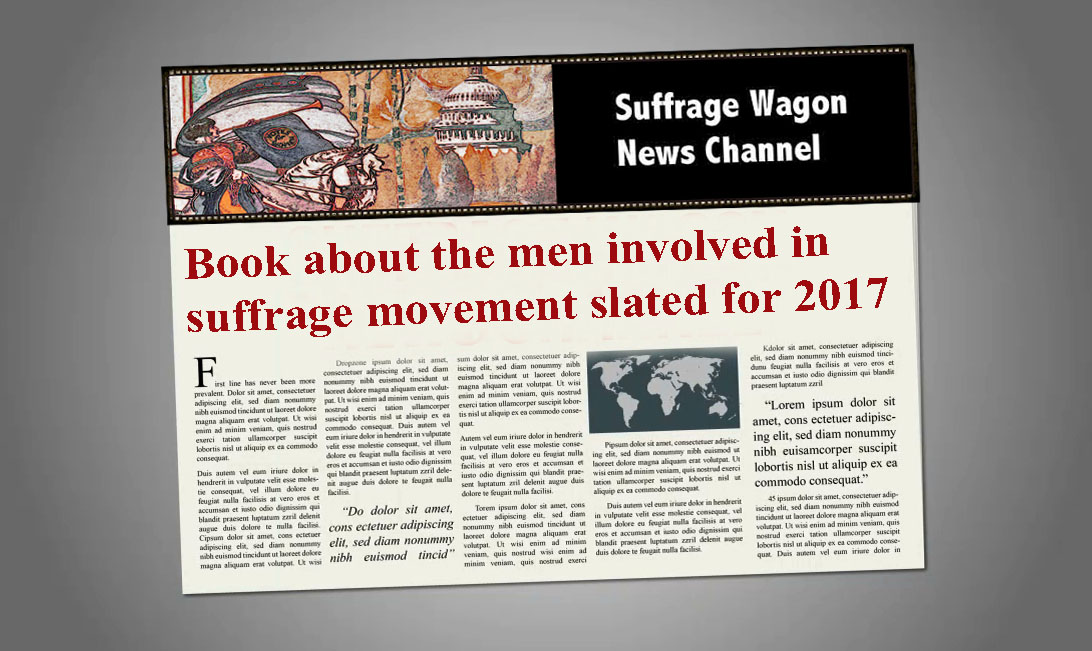
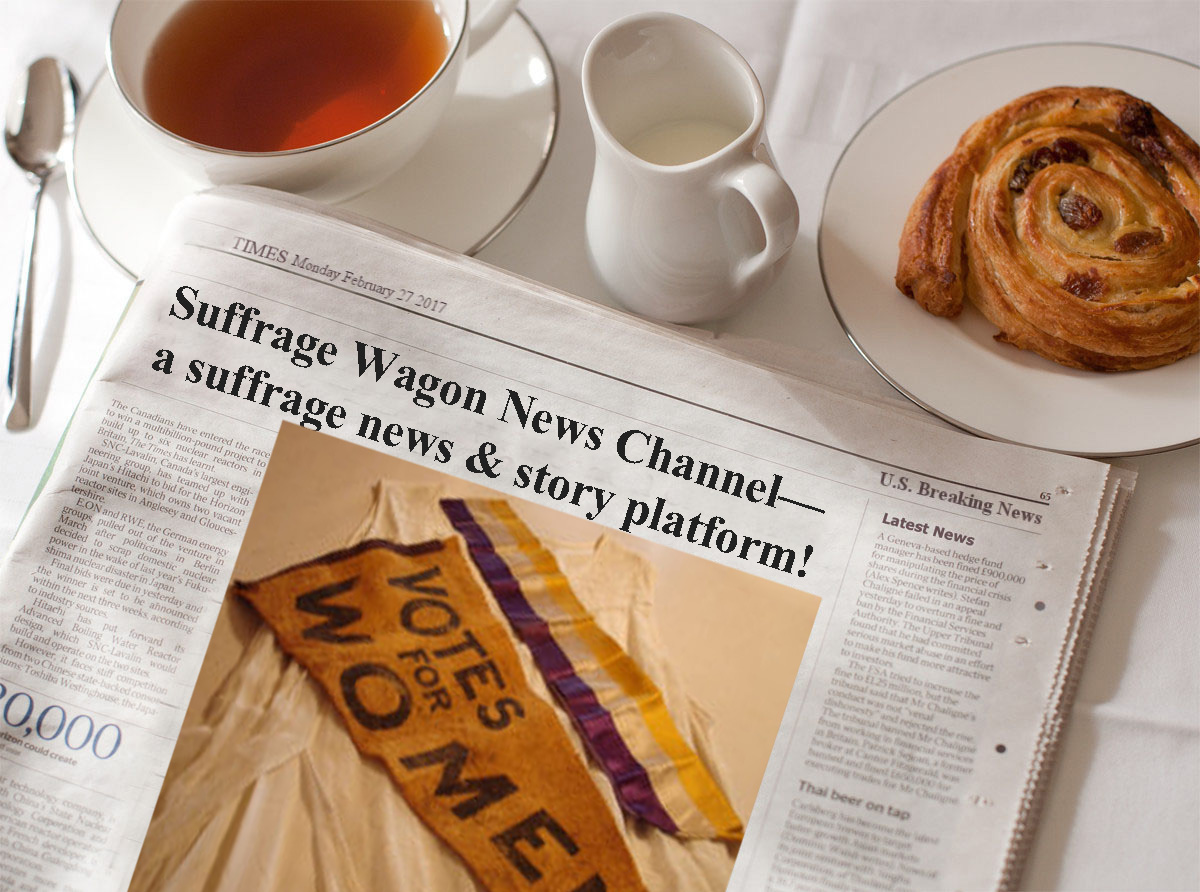
For more news items like this, subscribe to Suffrage Wagon News Channel.

Alice Paul’s birthday on January 11th!

AlicePaul

Suffragist Alice Paul’s birthday is on January 11th, and it’s also Alice Paul Day.

We have a NEW special feature highlighting Lucy Burns, Doris Stevens, and Alice Paul.

LINK to Suffrage Wagon News Channel’s tribute to Alice, Lucy, and Doris.

Special links with more information: Sewall-Belmont House in Washington, DC (the home of the National Woman’s Party) LINK and the Alice Paul Institute in Mount Laurel, New Jersey LINK.

Subscribe to news and views and stories of the suffrage movement.

Mother’s Day interview about Grandmother Edna Buckman Kearns

Mother’s Day card from National Women’s History Project

Mother’s Day has come and gone again. I’m on the road headed to Albany to see Grandmother Edna’s suffrage campaign wagon so I’m somewhat behind.

Here’s a link to the Mother’s Day interview featured on Chick History about Grandmother Edna Kearns and Suffrage Wagon News Channel. Our mothers and grandmother suffragists and great-grandmothers would be pleased about the increasing fascination with the details of their hard work to win the vote.

When you check out some recent articles that have appeared around the country, you’ll discover the gradual, but steady growth in interest in leadership today and how this can be linked to the suffrage movement.

Here are some examples: Forbes has an article about how 2012 is considered another Year of the Woman and how this has implications for the November election outcome. An Oregon woman shows us how to sew a suffrage bow. A bike ride in Iowa is named in honor of Carrie Chapman Catt. The first woman to be appointed as a federal court judge in Maine cites the suffrage movement and  various waves of activists who followed as responsible for remarkable accomplishments and opportunities available today.


Doris Stevens knew Alice Paul back when. . .

“Alice Paul brought back to the fight that note of immediacy which
had gone with the passing of Miss Anthony’s leadership. She
called a halt on further pleading, wheedling, proving, praying.
It was as if she had bidden women stand erect, with confidence in
themselves and in their own judgments, and compelled them to be
self-respecting enough to dare to put their freedom first, and so
determine for themselves the day when they should be free. Those
who had a taste of begging under the old regime and who abandoned
it for demanding, know how fine and strong a thing it is to
realize that you must take what is yours and not waste your
energy proving that you are or will some day be worthy of a gift
of power from your masters. On that glad day of discovery you
have first freed yourself to fight for freedom. Alice Paul gave to thousands of women the essence of freedom.”

Doris Stevens, from Jailed for Freedom

Listen to the free audio of “Jailed for Freedom” by Doris Stevens on Suffrage Wagon News Channel.

New curriculum materials for “Iron Jawed Angels” film

Grandmother Edna Kearns wouldn’t have had a starring role in “Iron Jawed Angels,” a classic introduction for many about the woman’s suffrage movement. However, she would have been in the office of the National Woman’s Party during the scenes when the suffs picketed the White House. And as such, she would have represented the many grassroots activists it took to win Votes for Women. Check out the mention of Edna in the online magazine, New York History.

Now there’s a curriculum guide available that uses “Iron Jawed Angels” to make history come alive. I haven’t seen the materials myself, but I’m passing them on because they stress the angle of nonviolent social change and its importance in the suffrage movement. Check out the press release. Plus additional information.

Suffrage Wagon News Channel is now on a new platform.

Could women vote and still be good mothers?

This was actually part of the conversation back in the good ‘ole days. Considering that grandmother Edna Kearns’ oldest daughter Serena was a poster child for the suffrage movement,  Edna definitely felt sensitive about criticism for taking her daughter on the campaign trail. Often people shouted at her from the sidelines: “You should be at home taking care of your child.” For Serena, accompanying her mother was thrilling and no doubt, educational. Even though at the turn of the 20th century it was noteworthy for a young person to join the movement, there were instances of young people taking part, such as with this photo, above, of children barnstorming for the movement. Edna’s in the photo, though barely. You can barely see the top of her head to the left of the driver, behind the flags. Edna handled media relations, so I expect she was responsible for this image appearing in numerous Long Island and NYC publications. The news article below illustrates Edna’s response to criticism that suffragists weren’t good mothers.

Don’t forget about Tara Bloyd’s article in “Albany Kid” last week that features Serena Kearns, her mother Edna Kearns’ suffrage campaign wagon, and the young people of the suffrage movement.

Great music video about suffrage movement goes viral!

Treat yourself by watching this fabulous music video about the suffrage movement called “Bad Romance.” And while poking around the internet this morning, I found news of publishers in the U.S. and U.K. bidding over the rights of a book about a suffragette that resulted in an advance in the six figures. Take a look. Noted the editor in charge of acquiring the book:  ”How could I not fall in love with a beautiful Indian princess who was a suffragette and a revolutionary?”

I’m monitoring the internet when I have a chance, and wish I could say that awareness of the suffrage movement has entered the mainstream. Sadly, it hasn’t. An overall lack of awareness about the suffrage movement isn’t anything to laugh about either, like in this YouTube piece. Because so many school history textbooks portray the suffrage movement with little more than a photo and a caption, it isn’t surprising about the ignorance of many girls and boys concerning this extraordinary civil rights struggle that took 72 years.

Sparks flew over Edna Kearns’ plan for Better Babies

Sparks flew within the Long Island suffrage movement when Edna Kearns broadened her scope and linked voting with better care for babies. This drew the ire of suff activist Rosalie Jones and others who believed that the women had enough on their plate merely advocating for Votes for Women. Several articles on the subject outline the disagreement: Article 1 and Article 2.  And it was noted that Edna had once been president of the Rockville Centre Suffrage Club, but she’d shifted her allegiance to the South Side Political Equity League. Long Island news coverage of Better Babies issue.

It’s true: Suffragist Edna Kearns “can can”

An article appeared in The Monroe County Mail (Fairport, NY) on October 21, 1915 that’s worth taking a look at. The piece meant the news traveled from Long Island to upstate New York with information about my grandmother’s “can can” campaign. It was intended to prove that a woman could both “can” and make a good speech. Edna harvested the fresh fruit in season and then put the energy to work for Votes for Women. See 1915 column called “Woman’s World.”  Grandmother Edna was determined to demonstrate that voting and safe food were related. She didn’t just talk about it. She canned herself and taught others about safe canning techniques. Edna also raised funds for the suffrage movement by canning.

The suffragists modeled leadership –how people can take advantage of existing opportunities to spread the word about their cause or special interests. Grandmother Edna Kearns knew that women could be reached in the kitchen. So she focused on where women could make the connection between political rights and the domestic arts. Thus, her “Can Can” campaign reached women in their own homes!

Subscribe to the Suffrage Wagon News Channel.

Mentoring program for leadership

The New Agenda is sponsoring a mentor exchange. This is an important part of building leadership among younger people. Can you help with The New Agenda’s program? Or continue with what you’re doing already. The suffragists demonstrated leadership in their “can do” attitude and persistence in seeing an issue through to its logical conclusion, which took 72 years. The suffragists were “there” for us. Let’s be “there” for them by carrying on their work of freedom and social justice.

To participate in the New Agenda’s mentoring program, find out more. Why? Because, as The New Agenda explains:

“This initiative also comes at a time when women are experiencing a widening promotion and pay gap.  In 2011 for the first time in history, women surpassed men as recipients of college degrees.  But according to a McKinsey report, 53% of entry level jobs are held by women today but the number declines to 37% for mid-management and even lower at 26% for senior level roles.   In fields like corporate management and politics, men still occupy 84% and 83% of leadership roles, and women’s progress has stalled or is moving backwards.   The Bureau of Labor Statistics reports that women still only earn 80 percent of what men do in annual salary and benefits.”

The suffrage torch is passing on to a new generation

The suffrage torch has been passed to the next generation, and young people are running with the flame. This week’s NYT article on change.org spells it out.

And a new video on You Tube by two young women (Sylvia Ashley and Ane Grytten) presents archival suffrage images and original lyrics featuring the suffrage movement as a history lesson where voting is linked with being part of a democratic movement.

Why are stories of the suffrage movement significant? Storyteller Alton Takayama-Chung has this to remind us: “Younger generations may not have an interest in their culture or family history. They may not have the stories of their ancestors to fall back upon when faced with new situations. Culturally specific, historically accurate stories can be used to fill this need.”

Image: Library of Congress. Subscribe to the Suffrage Wagon News Channel to find out how to build leadership through stories of the suffrage movement.

New Year’s Resolution 2012

Happy new year!

Suffrage Wagon News Channel is two years old!!!

Subscribe to the Suffrage Wagon News Channel

Telling the story, one clipping at a time

I’ve been working through grandmother Edna’s archive of letters, news clippings, photos, and memorabilia of the New York State suffrage movement and have barely scratched the surface. The next step is to weave these snippets into an overall story that highlights what it took to win the vote on the local level. There’s a digital storytelling movement underway nationwide, and it seems timely to move these tales into a chronology and then choose a core story around which to organize the material. Blogs are a way to document the process when the world around us changes so quickly. I like to keep inching forward with this project. Even the TV fall lineup for 2011 is into storytelling, which I believe reflects a basic instinct to listen to, enjoy, and pass on story. We think and dream and live story. I’ll be sharing more of Edna’s stories as the focus on her life grows tighter.
Suffrage protestor . . .

Suffrage leader Harriot Stanton Blatch cracks the whip

and tells activists “no more pink teas.”

A bad reputation for tea parties . . .

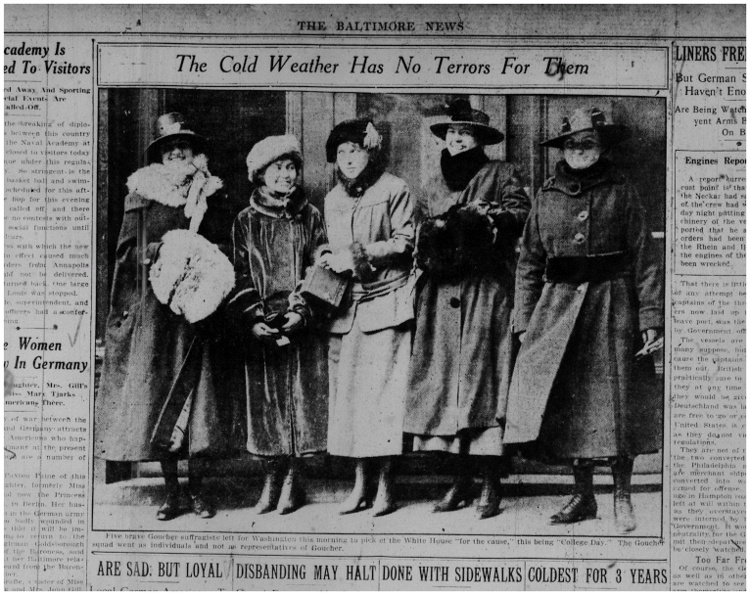
Tea receptions had a distinct function during the suffrage movement –of bringing women together, to raise funds and rally for the cause. In March of 1915, Harriot Stanton Blatch and her Women’s Political Union called upon activists to end their suffrage frills: “No more pink teas,” Mrs. Blatch said. “But direct work with the men.” Mrs. Blatch’s reaction suggests that women might have been loving their tea parties a little too much and put organizing for the suffrage general election on the back burner. Which is another reason to use the occasion of High Tea events to combine education, pleasure and discussion about the world and how we can make a special contribution in these times.
Citizen reporters and grassroots organizers have ancestors in the suffrage movement

The suffragists didn’t wait for the editors of big newspapers to recognize them. When it happened –great. But the suffs weren’t satisfied with sitting around and biting their nails. When the number of Long Island newspapers expanded at the turn of the 20th century, the women took advantage of it. Grandmother Edna Kearns was in the forefront of citizen reporters who generated a hefty amount of suffrage material to fill the news holes of local papers.

The suffs hit the ground running at a time in history when it took considerable effort for a woman to land a reporter’s job in a news room.  So they documented their own news and distributed it. The South Side Observer, for example, set aside 500 extra copies of the suffrage special issue, which the women clipped and saved. Grandmother Edna was instrumental in collecting quotes for this special issue from prominent community members who favored Votes for Women.

Suffrage advocates also published their own newspapers and newsletters; they arranged with photographic agencies to cover their events. They lobbied editors for special issues, wrote letters to newspaper editors for publication, prepared and distributed their own press releases, wrote leaflets in a variety of languages for distribution among immigrant communities. When this wasn’t enough, they carried soapboxes into the street, stood up on them, and commanded the attention of anyone who passed by.

All of this constitutes sophisticated grassroots organizing. So, for those who believe that Saul Alinsky invented community organizing, history should be rewritten to say that he stood on the shoulders of the suffragists and others. The suffs operated from outside the political system and they were brilliant in finding ways to impact it.

Women are key in peace process

Many suffragists not only worked for civil rights, but they also took stands for peace –not an insignificant position during World War I. Votes for Women wasn’t a single issue for many women in the suffrage movement. They may have worked for their own civil rights, but they viewed the struggle in a broader context. Here’s an excellent article about the 2011 Nobel Peace Prize that gives an overview of the award’s history and the significance of this year’s awards honoring three women. The piece points out the importance of women being involved in bringing about an end to armed conflict and how many peace efforts lack the participation of women altogether.
Skirts down and hair up . . . rules for marchers
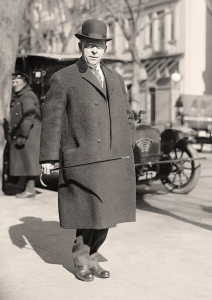
Concerned in 1913 that they might be criticized for being unproper, the suffragists laid down  strict rules for marchers. See the article explaining how Mrs. James Lees Laidlaw didn’t like the looks of legs in a parade. “It looked very bad last year,” she explained, to see children’s long legs “bobbing” along. “This year we won’t allow any one in line whose skirt is more than four inches above the ground.”

Grandmother Edna Kearns took risks for Votes for Women

These suffs hit the streets in 1914 in Washington, DC to spread the word. Meanwhile, back in New York on November 3, 1914, my grandmother Edna climbed up on scaffolding high above the city. She was one of eight suffragists who volunteered to paint a billboard at 110th Street and Amsterdam Avenue to advertise a suffrage event at Carnegie Hall. See article. Edna was fond of clipping articles and underlining her name, just so people like me would be sure to know it wasn’t a clipping destined for the trash bin. (Photo above from the Harris & Ewing collection in the Library of Congress. News clipping from the NY Tribune, from the archive of Edna Buckman Kearns)

Download Free Suffrage Song

“Oh dear, what can the matter be” (a suffrage song) by L. May Wheeler is free for the downloading as a special gift for you during Women’s History Month from performer Gerri Gribi. Enjoy it. When you’re holding a special afternoon tea during March, play it! Gerri talks about the song during an interview that’s available on our suffragewagon.org web site. Check out this short audio clip! “Oh, dear, what can the matter be” is featured on the DVD, “Five Generations and the Million Dollar Wagon.” And the direct link to the song can be found here.

You Can’t Watch This DVD Enough!

The documentary  “Not For Ourselves Alone” is worth repeated viewings. It can be ordered online or through instant play on Netflix. Noted doc filmmaker Ken Burns: ”I don’t think I could call myself a documentary film maker interested in surveying the terrain of my country’s history, as I have been doing for the past 25 years, without expressing artistically my outrage at why this story, the largest social movement in the history of the United States, is given essentially a picture and a caption in our history books.”

A Special New Year’s Card

Holiday card pasted in my grandmother Edna’s scrapbook, 1900.

Yanking Your Vote Away With a Smile. . .

This isn’t a skit on Comedy Central. Judson Phillips isn’t joking when he proposes that only property owners should be able to vote in U.S. elections. The Tea Party founder has been floating this trial balloon recently to see if the idea will sink or swim. It sounds more like a temper tantrum than a serious proposal. Yes –a temper tantrum where Phillips is shaking his fist and stomping his feet because the population is becoming increasingly diverse and all sorts of people are becoming empowered, especially at the polls.

Come to think of it, a healthy proportion of the people on my holiday card list this year would  be turned away on election day under Phillips’ plan. This would include highly-mobile professionals, renters, city dwellers, women, the young, students, the retired and those downsizing in the current recession for any number of reasons. Apparently the idea of redefining voting rights has juice among those who either have no idea of the great sacrifice that was involved with the major civil rights struggles of the 20th century (of which woman’s suffrage was significant), or they simply couldn’t care less because of their personal and political agendas.